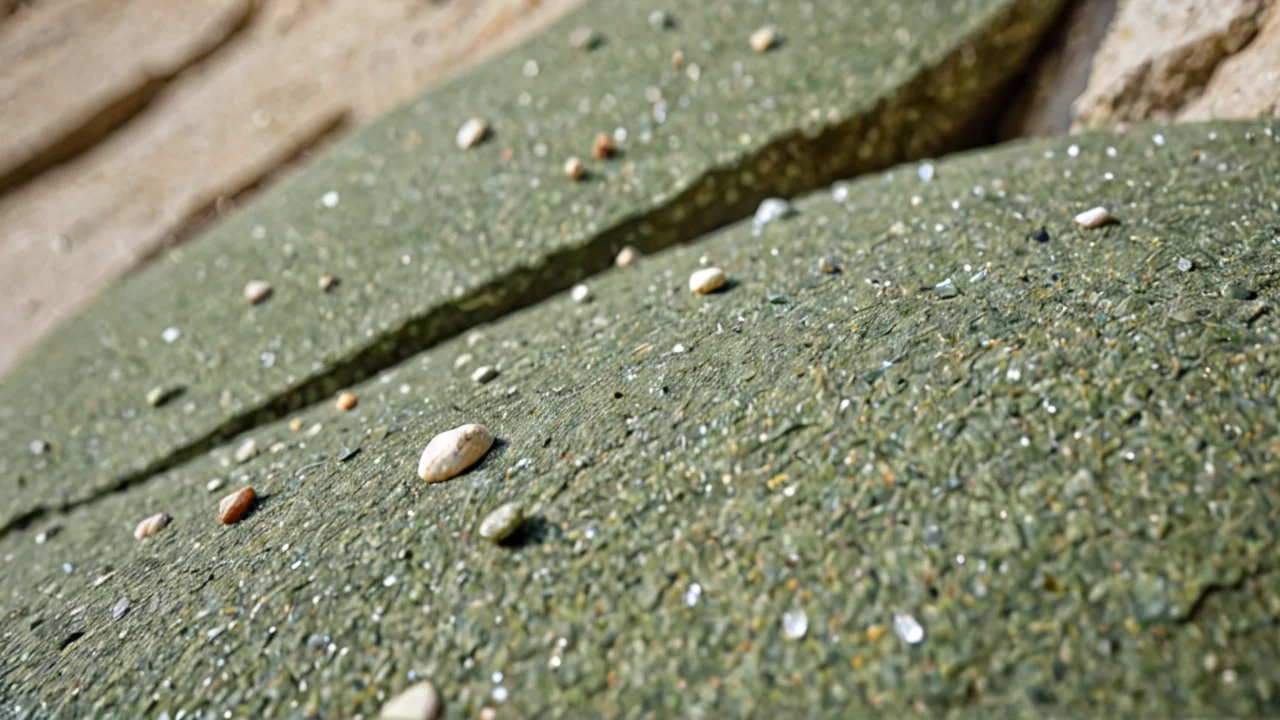
The biggest mistake newcomers make when approaching outdoor climbing games is treating it like an athletic competition focused solely on sheer power or speed; they arrive thinking that a strong bicep curl will carry them to the summit, leading to inevitable overuse injuries and rapid burnout.
Understanding the Activity
At its core, rock climbing is not just a physical activity—it is a complex problem-solving exercise executed on three dimensions. When people ask what rock climbing is, they are often looking for a simple definition of vertical movement, but it encompasses everything from advanced biomechanics to mental fortitude. It requires understanding the interaction between your body and the substrate; you must treat every handhold and foothold as part of a puzzle.
For someone getting into the sport, knowing how to start is less about finding the hardest route and more about establishing fundamental safety protocols. Most beginners spend too much time fixated on grade difficulty rather than mastering the core movement patterns—the precise foot placement, the controlled weight transfer, and maintaining an efficient center of gravity across varied textures. The early stages are defined by repetition: learning how to fall safely, how to belay correctly, and understanding the specific muscular engagement required for different types of holds.
The appeal that draws people in is often the immediate feedback loop: a slight adjustment in hip movement or a shift in core tension results in vastly improved efficiency on the next move. This sense of mastery—of overcoming a physical puzzle with calculated effort—is what distinguishes climbing from simply exercising. You are applying principles of sports psychology, recognizing that performance hinges just as much on mental calm and route planning as it does on raw strength.
Essential Gear Selection
Choosing the right equipment involves balancing safety margins against weight penalties. For outdoor play or challenging games, your gear must be reliable across temperature extremes and unpredictable rock quality. Beginners often overspend on brightly colored, overly complex pieces of hardware they assume will make them seem more competent; a better approach is to prioritize function and simplicity.
When deciding what to wear for climbing, the focus should always be on maximizing freedom of movement without adding bulk or heat retention problems. Highly breathable synthetic materials are preferred because they wick sweat efficiently while providing structural integrity against abrasive rock surfaces. You need shoes that offer exceptional toe grip and precision fit; these rubber soles must bite into small edges. Crucially, your harness system needs to be simple, durable, and reliable when subjected to dynamic loading—the sudden jerk back of a falling climber.
The trade-off here is between specialty gear optimized for one type of rock (e.g., smooth granite versus jagged limestone) and the versatility needed for true outdoor games. A highly specialized piece might give you an edge on a perfect day but will prove useless when conditions change or the terrain shifts toward something less ideal. Always check your local guiding resources before committing to high-end, specific products; often, simpler, well-maintained models perform better.
Physical Conditioning Needs
People frequently ask if rock climbing is a good workout, and the answer is an emphatic yes—it’s highly functional strength training that mimics human movement far more closely than many gym routines. It doesn't just work one or two muscles; it demands systemic integration.
The primary muscles worked are not just the forearms (which fatigue quickly) but the entire kinetic chain: the core provides the stable platform for every reach, the hips dictate how far you can move your feet, and the lats pull your body mass up from below. You will find that grip strength is heavily taxed, but so is stabilizing the shoulder joint when holding an awkward angle for prolonged periods. The workout is dynamic, meaning the load changes constantly, forcing micro-adjustments in every major muscle group.
If you approach climbing with a fitness mindset—viewing it as merely a way to get a pump or burn calories—you will be disappointed. It must be approached scientifically; this is where sports psychology becomes vital. The conditioning required isn't just physical endurance (how long you can keep moving), but tactical energy management (knowing when to rest the specific muscles that are failing most rapidly). A skilled climber rations their power, knowing which moves require maximum effort versus those that only need calculated balance.
Climbing as a Sport
Yes, rock climbing is absolutely recognized as a sport. Its inclusion in major global athletic events confirms its status. The structure of competitive climbing has evolved significantly, moving far beyond simply who can reach the highest point first. Modern competition involves navigating specific routes that test technical skill, endurance, and precise movement planning.
When thinking about professional or high-level play, the sport tests mental resilience almost as much as physical prowess. The pressure of knowing failure means falling, combined with the necessity of calculating weight shifts across tiny edges, creates a unique psychological profile. This is why understanding how to manage fear and frustration—elements studied in sports psychology—is critical for advancing from fun recreation to elite performance.
If you want to get into competitive games, remember that the objective isn't always brute force; it might be traversing a section efficiently, or perhaps executing a difficult, specific maneuver like a drop shot in badminton—a precise placement of an implement over a net—translated into finding the perfect, minimal-effort foothold. It requires pattern recognition and adaptation to varying conditions.
The Challenge Games
The most fun and challenging outdoor climbing games are those that incorporate elements of time pressure, cooperative puzzle solving, or simulated competition without undue risk. These games move beyond simply "climb the wall" and focus on complex route design.
One popular format involves 'Relay Puzzle Climbing,' where a team must complete several different, unconnected routes using limited resources (like specialized chalk mixes or minimal piece of gear) before time runs out. The challenge isn't just climbing; it's optimizing the sequence and sharing loads efficiently—a perfect test of teamwork and resource management.
Another highly challenging variation is 'The Vertical Circuit,' where a group must complete multiple, diverse climbs (e.g., one requiring pure fingertip strength, another demanding lateral movement across slippery rock) in rapid succession. This tests the body’s ability to recover from immediate muscular fatigue while maintaining peak cognitive function. When doing this, you quickly learn that what felt like an insurmountable climb yesterday might be manageable today simply because your muscles have adapted and learned a better sequence.
A key element of these games is recognizing when to adapt the game structure itself. If a route proves too difficult for the group's current skill level, the true victory lies in modifying the challenge—perhaps by focusing on minimizing weight while traversing rather than maximizing height climbed—rather than simply giving up and calling it a loss.
Designing Games Around the Route, Not the Clock
Time pressure is the first variable most groups reach for, and it is usually the wrong one. Put a stopwatch on a route that already demands careful footwork and you get exactly what you would expect: rushed placements, skipped sequences, and the specific injury that comes from a foot popping off a smear because someone was sprinting up a slab. Build the constraint into the route instead. Mark a handful of holds as off-limits before anyone leaves the ground, or require that a particular stretch be climbed without using the left hand at all. The difficulty lives in the puzzle, the clock stays out of it, and nobody leaves with a sprained ankle.
The practical sequence matters. Walk the base of the route together first and agree on the rules out loud, because the argument after a failed attempt is almost always about a constraint nobody actually defined. Decide what counts as a touch, whether a dab on the rock resets the attempt, and how far a fall has to be before you start over. Write it on a phone note if the group is bigger than three. Then climb in a fixed rotation, one attempt each, so the person who recovers fastest does not simply get more tries than everyone else.
What goes wrong most often is constraint stacking. A no-left-hand rule plus a no-rest rule plus a time limit produces a game nobody can finish and a group that quietly stops caring by the third attempt. Add one constraint per round and only if the previous round was cleared by most of the group. If you are the one setting the rules, your job is to watch for the moment the game stops being hard and starts being arbitrary, and to pull it back before that point. The cost here is real: designing a good route-based game takes longer than shouting "go," and it requires someone willing to scout the wall rather than climb it.
Running a Vertical Circuit Without Blowing Up the Group
A circuit works when the climbs are chosen for contrasting demands rather than for a shared grade. Pick one that punishes fingertips on small edges, one that forces lateral movement across lower-angle rock, and one that rewards pure body-positioning on bigger holds. Order them so the crimpy one comes first, while hands are fresh, and the lateral traverse comes last, when precision is already degrading. The order is the game. Reverse it and the circuit becomes a forearm endurance test with two filler climbs attached.
Recovery is where circuits actually get decided, and it is where groups misjudge themselves. After a hard burn on small edges, your grip does not come back on the timescale your enthusiasm suggests it will. Give each climber a full rest between stations, moving the group through in a rotation so nobody is standing at the base cooling down while someone else works. If a climber cannot open and close their hands cleanly, they are done on crimps for the day regardless of what the rotation says.
The failure mode to watch for is the silent drop-out: one person quietly sits out the third station and never rejoins, usually because they were pushed onto a climb two grades above what the group agreed. Ask before each station whether the difficulty still fits the weakest climber in the rotation, not the strongest. A circuit that only three of five people can complete is a fine training session and a poor game. The trade-off is that a genuinely inclusive circuit takes more route scouting and often a longer walk between climbs, which eats into the day.
Adapting the Rules Mid-Session
Modify the game when a route is clearly beyond the group, and do it by changing the objective rather than lowering the wall. If a traverse is too hard to complete, make the win condition "fewest foot adjustments" or "most distance covered before a fall" instead of a clean top-out. This keeps everyone on the same piece of rock and preserves the comparison that makes a game feel like a game. Announcing a change mid-attempt is the mistake; finish the round, then reset the rules for everyone at once.
Keep a short written record of what you changed and how the group responded, because the same adaptation tends to work on the same wall. Groups that skip this repeat the same failed format every season. A phone note with three lines—route, constraint, outcome—is enough, and it turns a casual afternoon into something you can actually build on next time.
Know when adaptation becomes avoidance. Changing the objective because the group is tired or the rock is wet is sensible. Changing it every time a climber gets frustrated teaches the group that difficulty is something to be negotiated away rather than worked through, and that habit follows people onto routes where the rock does not care how they feel about it. The honest test is simple: are you adapting the game, or are you adapting away from the climbing? If you cannot answer that out loud without hesitation, the game has already stopped doing its job.