Climbing styles are the rules a climber chooses to follow on a given ascent — and they are a ranking system, not a menu of hobbies. The style you use determines whether a climb counts as a first ascent, whether your grade is comparable to anyone else's, and how much of the difficulty you can honestly claim. The two axes that matter most are protection (what stops you falling, and who placed it) and ascent type (how you got from the bottom to the top). Every other label — trad, sport, bouldering, free solo, aid — is a point on those two axes, and every one of them trades safety, logistics or ethics for something else.
The four styles you will actually climb in, and what separates them
Bouldering, sport climbing, trad climbing and top-roping are the four styles that cover the overwhelming majority of climbing done in a gym or on rock, and they differ in exactly two things: whether there is a rope, and whether the protection is fixed to the wall or placed by the climber.
Bouldering is climbing without a rope at a height where falling to the ground is the expected outcome. The protection is the ground itself plus crash pads and, at the top end, spotters. Because there is no rope and no rack, bouldering is the most accessible style and the most concentrated: problems are short, the moves are often the hardest of any discipline, and the commitment is measured in seconds rather than pitches. The cost is that the style is defined by the fall being survivable, which caps the height and makes pad placement and landing quality part of the problem.
Sport climbing is climbing a bolted route where the protection is permanently fixed to the rock. The climber clips the rope through the bolts as they pass. This removes the rack, the route-finding around gear placements and most of the fear of a bad fall, which is why sport climbing is where most people push their hardest roped grades. The cost is that sport climbing depends entirely on someone having bolted the line — bolted routes are concentrated in developed crags and are largely absent from remote terrain.
Trad climbing (traditional) is climbing where the leader places removable protection — nuts, cams, slings — and the second removes it. Nothing is left behind. This is the style that opens up unclimbed rock, because it requires no drilling. It is also the style with the highest skill ceiling for the leader, because placing gear that will actually hold a fall, in the right orientation, while hanging off one arm, is a separate competence from the climbing itself. The cost is time, weight on the harness, and a genuine possibility that the protection is worse than it looks.
Top-roping is climbing with the rope already anchored at the top of the route. There is no lead fall, so the style is the safest of the four and the standard way beginners are introduced to height. Its limitation is that it requires access to the top of the cliff — either a walk around or someone leading the route first — so it is not a style you can use to climb a wall from the ground up.
| Style | Rope | Protection | Fall potential | Best suited to |
|---|---|---|---|---|
| Bouldering | None | Pads, spotters, ground | Ground falls, expected | Maximum difficulty in short bursts |
| Sport | Yes | Fixed bolts | Lead falls onto bolts | Pushing roped grades on developed crags |
| Trad | Yes | Placed by the climber | Lead falls onto placed gear | Unclimbed or remote rock |
| Top-rope | Yes | Anchor above | None on the climb | Learning, and working hard routes safely |
One thing the table flattens: sport and trad are not a hierarchy of difficulty, they are a hierarchy of responsibility. A trad route at a moderate grade can demand more judgement than a sport route several grades harder, because the trad leader is making protection decisions the sport climber never has to think about.
Free, aid, solo: the ascent labels that change what a climb means
Separate from the protection style, every ascent carries a label describing how the climber got up. Free climbing means using hands and feet on the rock and the rope only to catch falls — no pulling on gear, no resting on the rope. Aid climbing means using the protection itself to make upward progress: standing in slings, pulling on gear, laddering etriers. Free soloing is free climbing with no rope at all, where a fall is a ground fall from wherever you are. Top-rope and lead describe how the rope was run, not how the moves were done.
The distinction that trips up newcomers is that free and solo are not the same word and not the same risk. Free climbing is the normal way almost everyone climbs roped routes; the rope is there and it catches you. Free soloing removes that rope. Aid climbing sits in the opposite direction from free climbing: it is slower, it uses more equipment, and it exists so that climbers can get up features that are too blank or too loose to free climb. Big-wall routes are frequently climbed as a mix — aid through the hard or dangerous sections, free where possible — and the style label then has to describe the proportion, which is why you see descriptions of a route being climbed "mostly free" rather than free.
The cost of each label is different in kind. Free climbing costs effort and a willingness to fall. Aid climbing costs time, sometimes days on a wall, and a lot of hauling. Free soloing costs the margin for error — it is the one style where a mistake in any other competence, including route-finding and conditions, is unrecoverable. None of these labels is a moral ranking, and treating solo as the "purest" style is a common and dangerous misreading; it is simply the style that removes the backup system.
Grades only mean something inside a style
A climbing grade is a comparison, not a measurement, and it is only valid against other climbs of the same style. A bouldering grade and a sport grade are not convertible, because they describe different things: a boulder grade describes the difficulty of a short sequence, a route grade describes the difficulty of a longer effort that includes resting, pacing and clipping. You cannot take a number from one and carry it to the other and expect it to mean anything on the wall.
Trad grades are the clearest case, because a trad grade carries two pieces of information that a sport grade does not. The first is the difficulty of the moves. The second is how well protected the route is and how serious a fall would be — usually expressed as an adjective or a separate rating alongside the number. Two trad routes of identical move difficulty can carry very different grades because one is well protected and the other has long runouts above marginal gear. That second component is the one beginners underweight: a trad grade is partly a warning label, and reading only the number is how people end up on something that is well within their physical ability and well outside their head.
The practical consequence is that grade-chasing is style-specific. Progress in bouldering is measured in harder sequences, progress in sport in harder routes on bolts, progress in trad in harder routes with acceptable protection. A climber can move quickly in one and stall in another for years, and that is normal rather than a sign of failure. Grades are also consensus — they drift as holds break, as beta spreads and as enough people repeat a climb — so treat any single number as an estimate that enough climbers have agreed on, not as a fact about the rock.
What each style demands of your body, your head and your rack
The physical demands overlap far less than people assume. Bouldering rewards maximum strength and power over short durations, plus the ability to try the same move repeatedly at full effort. Sport climbing rewards strength endurance — the ability to keep climbing after the forearms start to complain — plus efficient clipping and route-reading. Trad climbing adds the cost of stopping to place gear, which converts a continuous effort into an intermittent one and demands that you can hang in balance while your hands are busy with something other than holding on. Top-roping demands the least of the three competences because the fear of falling is removed, which is exactly why it is useful for learning movement.
The mental demands invert the physical ones. Bouldering has the highest frequency of falling and the lowest consequence per fall, so the skill is committing to hard moves above pads. Sport climbing has bigger falls but clean ones, so the skill is trusting the bolts and not over-gripping. Trad climbing has the most variable consequences, so the skill is judgement: recognising when a placement is good, when a runout is acceptable, and when to back off. That judgement is not transferable from the other styles and it is the slowest thing to build.
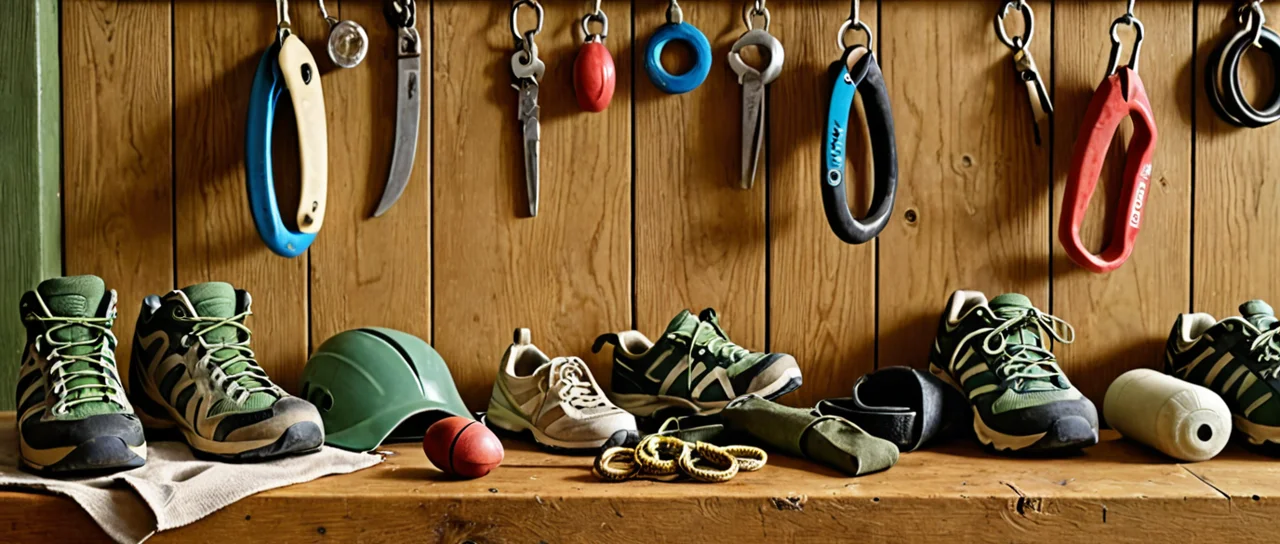
The equipment bill follows the same pattern. Bouldering needs shoes, chalk and a pad. Sport climbing needs a rope, harness, belay device, quickdraws and a helmet. Trad climbing needs all of that plus a rack of cams, nuts and slings, which is the single biggest equipment cost in the sport and the reason many climbers borrow or build a rack slowly. The honest trade-off is that the styles with the highest equipment cost are also the ones that open the most terrain: bolts and boulders are where other people have already been.
How to choose a style, and in what order
Start with bouldering and top-roping, add sport climbing when you can lead safely, and add trad when you want to climb where nobody has bolted. That sequence is not arbitrary: bouldering builds the movement vocabulary and the tolerance for falling, top-roping builds height comfort with the rope already above you, sport climbing teaches you to lead — clipping, rope management, falling on purpose — with protection you did not have to judge, and trad adds gear placement on top of a lead competence you already have. Learning to place gear before you are comfortable leading is the classic way to get into trouble, because you will be making protection decisions while also managing fear and rope.
The choice is also dictated by where you live. If your local rock is bolted, sport climbing is the path of least resistance and trad will mean travel. If your local rock is a gritstone edge or a mountain crag with no fixed gear, trad is the only way up and you will learn it earlier than the sequence above suggests. Gyms have made bouldering and top-roping almost universally available, which is why most people now enter the sport through bouldering regardless of what they will eventually climb outside.
The costs of the sequence are real. Bouldering is easy to start and easy to plateau on, because hard bouldering is a long strength project. Top-roping is safe and can become a comfort trap, since the skills it removes — clipping, fall practice, anchor building — are exactly the ones you need to progress. Sport climbing requires a developed crag and a partner who is competent to belay a lead fall. Trad requires a rack, a mentor and patience. Choosing a style is really choosing which of those costs you are willing to pay first.
The styles that sit outside the four, and where the labels break down
Several styles exist on the edges and they are worth knowing because they explain claims you will see in climbing media. Deep water soloing is free climbing above water with no rope, where the sea is the landing; it removes the equipment entirely and replaces the fall with a plunge, which limits it to specific coastlines and specific tides. Buildering is climbing on buildings and structures, usually without permission, and it sits outside any grading consensus. Indoor competition climbing has its own formats and its own style of movement, optimised for spectacle and for reading unfamiliar routes quickly, and its grades do not map cleanly onto outdoor grades. Via ferrata uses fixed cables and ladders and is closer to a protected scramble than to climbing, with its own equipment and its own risk profile.
The labels break down most often at the boundary between free and aid, and between trad and sport. A route can be bolted but climbed in traditional style, or trad-protected but with a bolt or two where no gear exists; climbers argue endlessly about whether a bolt placed on lead counts as part of the style, and the answer varies by crag and by local ethic rather than by any universal rule. Likewise, a boulder problem high enough to need a rope is sometimes called a highball and sometimes treated as a route, and the grade you are given depends on which convention the local community uses.
The useful habit is to ask two questions of any climb you read about: what was the protection, and how did the climber ascend it. Those two answers tell you almost everything about how hard the climb was, how dangerous it was, and whether the number attached to it is comparable to anything you have done. Style is not a detail appended to a climb — it is what makes the climb a claim in the first place, and a harder grade in a safer style is a different achievement from an easier grade in a serious one. Get the style right and the grades sort themselves out; get it wrong and the number is just a word.